Art Supplies Singapore
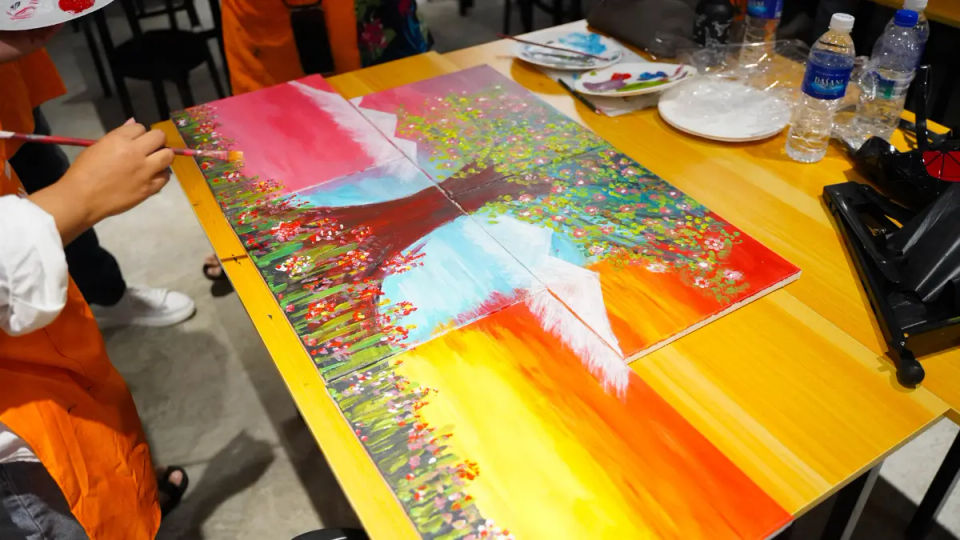
Quick answer: paint, three brushes and a surface. That is the whole list. Everything else sold as essential is either a convenience or a substitute for technique, and a beginner who buys the short list and uses it will get further than one who buys the long list and does not.
Here is what to spend on, what to skip, and roughly what order to buy things in.
The short list
- Acrylic paint. A basic set of six to eight colours, plus a separate larger tube of white.
- Three brushes. A wide flat, a medium round, a small round.
- A primed canvas. 30x40cm is a comfortable first size.
- A palette. Or a paper plate.
- Water pots. Two — one to rinse, one to keep clean.
- Table protection. Newspaper or a plastic sheet.
That is enough to paint anything a beginner will want to paint.
Where the money should go
Paint, first and by a distance. The difference between cheap and decent acrylic is immediately visible: cheap paint is thin, chalky and weak in colour, so you use twice as much and still see canvas through it. This is the one purchase where spending more genuinely produces a better painting.
Student grade from a known brand is the right level. Artist grade is better and unnecessary until you know you will keep going.
Canvas, second. Cheap canvas is loose on the frame and under-primed, which means it drinks the first coat. Primed and reasonably taut matters; a designer label does not.
Everything else, last. Brushes matter far less than people expect at this stage, provided they differ from each other.
What to skip
Twelve-brush sets. Usually ten variations of medium round and two you will never touch. Three genuinely different sizes beat twelve near-identical ones.
Easels. Pleasant and unnecessary. A canvas flat on a table is easier to control and far less likely to end up face down.
Mediums, gels and additives. Flow improvers, retarders, texture pastes. All useful eventually, none of them at the start, and buying them early usually means using them wrongly.
Forty colours. A large set feels generous and makes paintings worse — more choice produces more mixing, and more mixing produces brown. Three colours plus white is a better constraint than thirty is a resource.
Palette knives. Genuinely fun. Not a first purchase.
What one of each actually does
The wide flat brush does most of a painting: backgrounds, blocking in large shapes, anything covering ground. Beginners underuse it and then wonder why the canvas is taking hours.
The medium round is the workhorse — most shapes, most edges, most of the middle of a session.
The small round is for the last ten minutes. Starting a painting with it is the most reliable way to run out of time.
More on how to use them in how acrylics actually behave.
What to buy in what order
If you are building up over a few sessions rather than all at once:
- Paint, brushes, canvas. Enough to start.
- More white, and bigger tubes of whatever you use most. You will know after two canvases.
- A better wide brush. The first upgrade you will actually feel.
- Larger canvases. Once you stop running out of ideas before you run out of canvas.
- Mediums, knives, the rest. When you have a specific reason.
The full beginner buying guide goes into grades and what separates them.
Buying for a group
The maths changes. Shared paint works — one set between three or four painters is plenty, because nobody uses a whole tube in a session. Brushes do not share well, since everybody wants one at the same time.
So: paint in fewer, larger quantities, brushes one set each, one canvas each, and considerably more table protection than seems necessary. Buy the cheap end for anything disposable and put the saving into the paint.
Where to buy in Singapore covers which shops suit which part of that list.
Or buy nothing
Worth saying plainly, because the most common version of this story is someone buying a full kit for one afternoon and never opening it again.
In a session everything is laid out and there is nothing to bring — canvas, paints, brushes, palette, apron and someone to answer questions. How a session runs covers what is included. Buying materials makes sense once you know you want to keep painting, which is a much easier thing to know after one session than before.
More on materials
Art and Craft Supplies Singapore
Where to buy art and craft supplies in Singapore: the shops worth the trip, sorted by what each one is actually good for.
Read it
Art Stores in Singapore
Where to buy art materials in Singapore, what each kind of shop is good for, and when buying nothing at all is the better option.
Read it
Art Materials Singapore
What art materials a beginner needs, in what order, and how to tell student grade from artist grade without spending more to find out.
Read itReady to paint something?
Tell us your date, group size and venue. A written, itemised quote comes back within 24 hours.